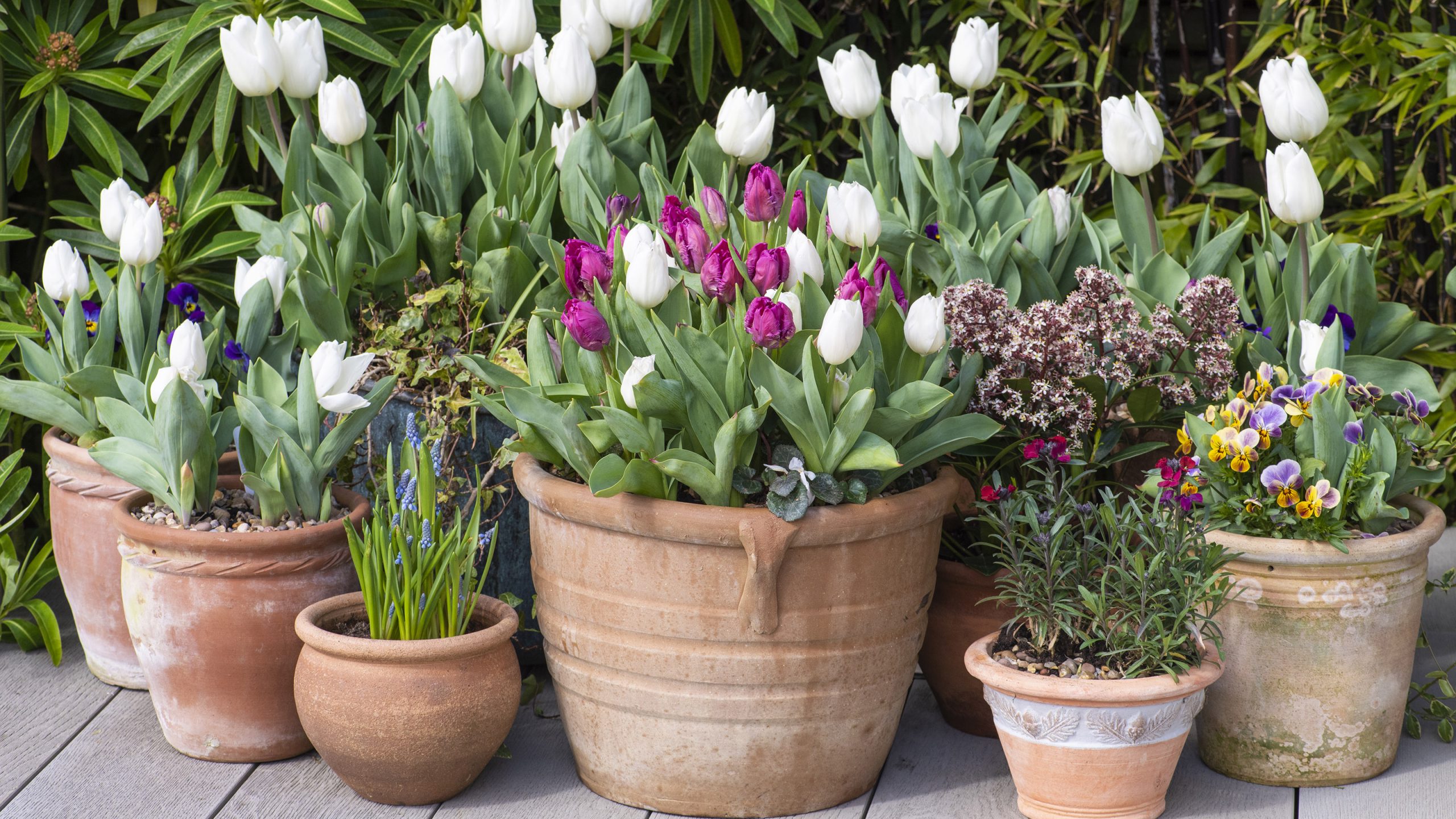
Tulips are among the most iconic spring flowers, beloved for their clean lines, vibrant colors, and elegant shape. While many think tulips can only grow in gardens, they actually thrive in pots, making them perfect for balconies, patios, small homes, and anyone who wants to enjoy seasonal flowers without a large outdoor space. Growing tulips in pots is simple but requires a few specific steps to ensure strong roots, healthy stems, and vibrant blooms. In this guide, you’ll learn all about selecting bulbs, preparing the soil, chilling the pot, and caring for tulips until they bloom.
Choosing the Right Tulip Bulbs
The first and most important step is selecting high-quality bulbs. Tulip growth in pots depends largely on the health of the bulbs, so choose firm, large bulbs free of cuts, mold, or soft spots. Larger bulbs always produce more beautiful flowers. Early-flowering varieties, such as ‘Triumph’, ‘Single Early’, and ‘Fosteriana’, are best suited to pots because they adapt well to limited root space. To create a colorful landscape, you can mix different types or colors of tulips in the same pot. Early fall is the best time to buy bulbs, as you can find the freshest bulbs and the widest selection before popular varieties sell out.
Choosing the Right Pot Size and Material
Theoretically, tulips can grow in almost any pot, but choosing the right pot makes planting easier and improves the quality of the flowers. Choose a pot that is at least 25-35 cm (10-14 inches) deep so the roots have plenty of room to grow. The wider the pot, the more bulbs you can plant—typically 5-7 bulbs per medium-sized pot and up to 12 per large pot. Be sure to choose a pot with multiple drainage holes, as tulip bulbs rot easily in waterlogged soil. Terracotta pots offer good ventilation, but plastic pots are also a good option if you prefer lightweight and easy-to-move pots.
Preparing a Well-Draining Soil Mix
Tulips need loose, well-draining, and nutrient-rich soil to thrive. Heavy garden soil is unsuitable for potting and often leads to bulb rot. Therefore, use a high-quality commercial potting soil. For even better results, mix the potting soil with perlite to improve drainage and add compost for long-lasting nutrients. This mix keeps the soil light, airy, and moisture-regulating. Fill the pot about two-thirds full, place the bulb on top, and cover with the remaining soil.
Planting Tulip Bulbs Correctly
Planting depth is crucial for potted tulips. Place the bulb with the point facing upwards, ensuring it is buried approximately 10-15 cm (4-6 inches) deep. This helps stabilize the stem and protects the bulb from temperature fluctuations. Plant the bulbs close together, but not touching, with about 2.5 cm (1 inch) between them. Close planting promotes fuller, more visually appealing “bouquet-like” flowers. After planting, lightly press the soil to remove the air and then water lightly. Do not overwater at this stage, as excessive moisture can easily cause mold and rot.
Why tulip bulbs need a cold period
Tulips need a period of cool temperatures to establish roots and prepare for spring blooms. Without this period, tulips will not bloom well. The bulbs need to grow for 12 to 14 weeks at a constant temperature of 1°C to 9°C (35°F to 48°F). If you live in a cold climate, simply place the pot outside in a cool, sheltered spot. If you live in a warm climate, place the pot in a basement, cool room, or refrigerator. Make sure the soil remains slightly moist during this time, but not too wet. After the cold period, you will notice roots starting to grow, indicating that the bulb is ready for sunlight.
Move the pot to a sunny spot after the cold period
Gradually move the pot to a sunny spot after the cold period. Tulips need at least 4-6 hours of sunlight daily, but avoid direct afternoon sunlight initially. Place them in partial shade for two to three days before moving them to a sunny spot. After a few weeks, you’ll see green shoots emerge from the soil. Keep the soil evenly moist, but avoid waterlogging.
Watering Tulips Properly
One of the most common mistakes beginners make is overwatering. Potted tulips need water, but not too much. Only water when the soil feels dry about 5 cm below the surface. Always avoid waterlogging. During the flowering period, tulips need a little more water, but reduce watering after flowering to prevent bulb rot.
Fertilizing Tulips
Tulips don’t need much fertilizer. Adding compost at the end of the growing season can help. First, place the bulbs in the refrigerator to dry them. Then, remove the bulbs from the pot, let them air-dry in a cool, shady spot, and store them for planting next fall.
Common Mistakes
Many beginners unknowingly reduce the chance of healthy flowering in their tulips. Avoid using shallow pots, heavy clay soil, skipping the chilling period, overwatering, or leaving the pots in a shady spot for extended periods. Also, don’t chill the bulbs together with fruits like apples—the fruit releases ethylene gas, which can damage the bulbs.
Frequently Asked Questions
1. Can tulips be grown indoors without sunlight?
No. Tulips need natural light to develop strong stems and vibrant flowers. You can grow tulips indoors, but they must be placed near a bright window.
2. How long does it take for tulips in pots to bloom?
After chilling, tulips usually bloom within 6-8 weeks, depending on the temperature and light conditions.
3. Can tulip bulbs be reused next year?
Yes, but potted tulips usually produce fewer flowers the following year. With proper care, the bulbs can still be saved and replanted.
4. When is the best time to plant potted tulips?
They are usually planted in the fall, usually between September and November, before winter temperatures drop.
5. Can tulips propagate in pots?
Tulips can propagate, but not as quickly as in outdoor flowerbeds.
Conclusion
Growing potted tulips is a simple and cost-effective way to bring a touch of spring into your home. With the right bulbs, soil, sufficiently cool temperatures, and consistent sunlight, you can enjoy vibrant blooms every year, even in a small space. Whether you grow tulips on your balcony or in your living room, potted tulips can brighten up your home in a beautiful and easy-to-care-for way.

Welcome to Walls and Clouds! Your go-to destination for inspiration, tips, and ideas on vertical gardening. Our mission is to make gardening accessible to everyone, no matter the size of their space. We believe that even a small wall can bring a touch of nature into everyday life.